

The first Senior Officials' Meeting of the Colombo Process under Sri Lanka's chairmanship reached a successful conclusion on Wednesday 7 May in Colombo with discussion and agreement on key labour migration principles, including the promotion of cheaper, faster and safer transfer of remittances, standard employment contracts, ethical labour recruitment, and cooperation and dialogue with the Abu Dhabi Dialogue (ADD). Established in 2003 in Colombo, the Colombo Process is a Regional Consultative Process on Labour Migration (RCP) of 11 labour sending countries from Asia comprising Afghanistan, Bangladesh, China, India, Indonesia, Nepal, Pakistan, Philippines, Sri Lanka, Thailand and Vietnam - all of who were represented at the meeting. The IOM, SDC and ILO were also associated with the Meeting. Sri Lanka assumed the chairmanship of the Colombo Process in October 2013.
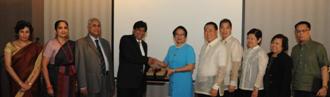
Minister of Foreign Employment Promotion and Welfare Dilan Perera met with his counterpart, Secretary Labour and Employment Rosalinda Dimapilis-Baldoz of the Philippines on Monday 6 January in Manila. The areas for collaboration discussed at the meeting included pre-departure orientation, qualification recognition process, comprehensive information orientation programmes and recruitment standards.
Minister Perera and Secretary Dimapilis-Baldoz met in their respective capacities as the current chairs-in-office of the two Regional Consultative Processes on the management of overseas employment and contractual labour in Asia, the Colombo Process and the Abu Dhabi Dialogue, respectively. Sri Lanka assumed the chair of the Colombo Process, comprising 11 countries of origin in Asia, last October in Geneva. CP comprises Afghanistan, Bangladesh, China, India, Indonesia, Nepal, Pakistan, Philippines, Sri Lanka, Thailand and Vietnam, while ADD has a membership that includes all CP members, and additionally receiving countries Bahrain, Kuwait, Malaysia, Oman, Qatar, Saudi Arabia, Singapore, United Arab Emirates and Yemen.

Ambassador Ravinatha Aryasinha, Sri Lanka's Permanent Representative to the UN in Geneva and Chairman of the Personal Representatives of the Group of Fifteen (G-15) has said the group recognizes the need to address international migration in a holistic and comprehensive manner, premised on the developmental paradigm of migration that is sensitive to the national circumstances of countries of origin, transit and destination and one that seeks to maximize the mutually beneficial nature of international migration while reducing its negative effects. He said the G-15 was committed to work together at both the regional and international level for the protection of migrants, and believed that the IOM should continue to play a lead role in discussions relating to the post-2015 development agenda on issues concerning migration.
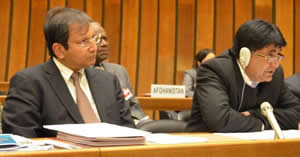
Minister of Foreign Employment Promotion & Welfare Dilan Perera has said Sri Lanka which recently assumed the Chairmanship of the Colombo Process - the Regional Consultative Process on migration, will do its utmost to share its experience and bring together the eleven countries and nine observer countries of this group to address common interests, including the mismatches between supply and demand and applying ethical concepts to foreign employment management. He said Sri Lanka will also play its full part in developing the post 2015 Millennium goal development architecture, emphasizing on Migration and Development.

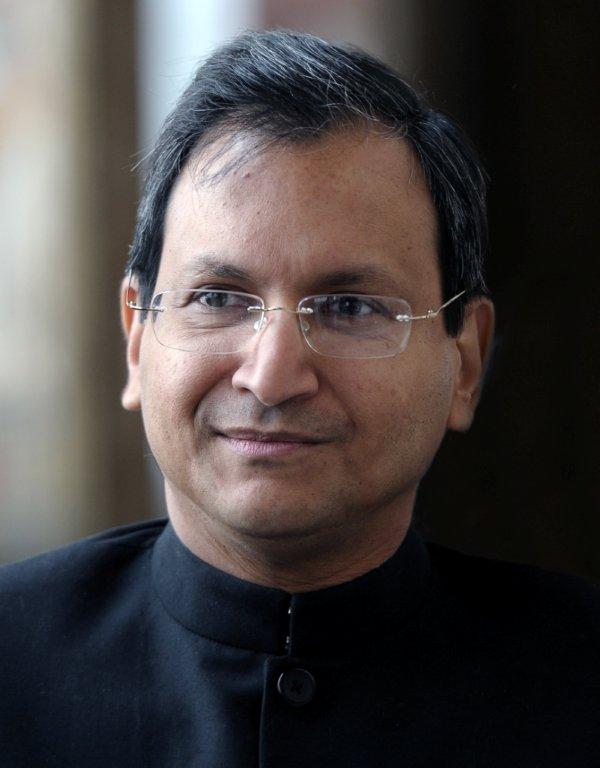
Sri Lanka's Ambassador to the UN in Geneva Ravinatha Aryasinha has said politically mobilized pro-LTTE diaspora sustain hatred and prevent reconciliation in Sri Lanka and that with groups having such a pre-disposition meaningful engagement was not possible. Noting that the transnational political opportunity structures prevalent in host states help shape and sustain such diaspora activism, he observed that countries which continue to condone with the hostility and disruptive tendencies shown by such pro-LTTE elements are giving a wrong signal.
Sri Lanka's Permanent Representative to the UN in Geneva Ambassador Ravinatha Aryasinha addressing a Briefing on Migration and Healthheld at the International Organization on Migration (IOM) on 19th April 2013 has said the Government has readily recognized that migrants and their families left behind in Sri Lanka are vulnerable to migration related health challenges. Joint initiatives between the Sri Lanka Bureau of Foreign Employment (SLBFE), the Ministry of Health and IOM, have been established to ensure that the health-abuse of migrants is effectively addressed. Following a series of public consultations the draft 'Migration Health Policy for Sri Lanka' is to be formalized through its submission to the Cabinet of Ministers for final approval.
Read Full text of the statement
- Foreign Govts. acknowledge that Sri Lankans who arrive illegally are economic migrants, not refugees
- Bureau of Foreign Employment shares SL’s lessons-learned & future plans at IOM workshop in Geneva
- 103rd session of the IOM Executive Committee 7-8 June 2006 Statement by the delegation of Sri Lanka (Mr. S. Pathirana, Second Secretary)