
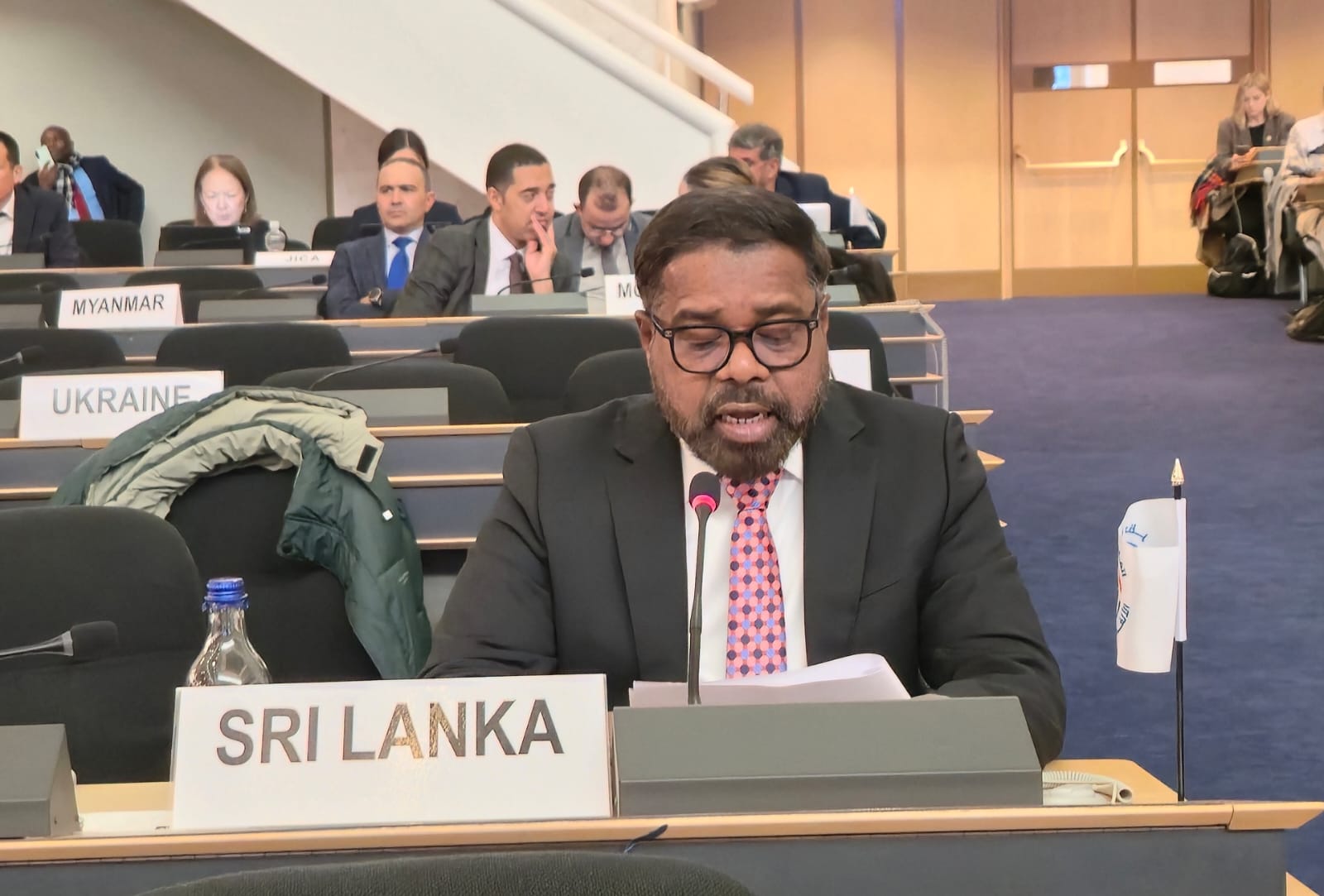
Madam President , Distinguished Delegates, Ladies and Gentlemen,
It is an honour to present Sri Lanka’s progress under Article 5 – Clearing Mined Areas, at the Twenty-Second Meeting of States Parties.
Progress in Fulfilling Article 5 Obligations
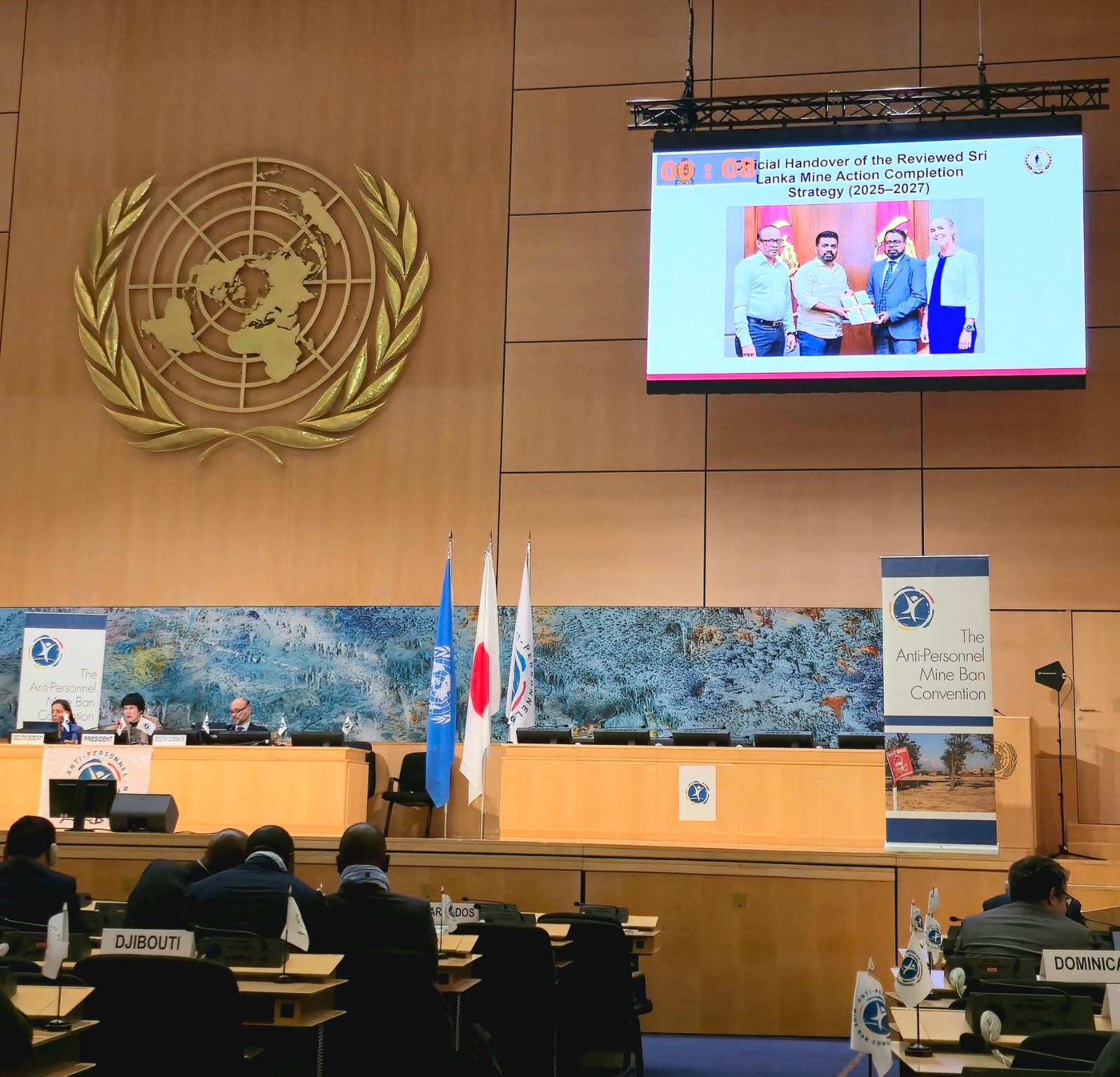
Since acceding to the Anti-Personnel Mine Ban Convention in 2018, Sri Lanka has followed a strong, coordinated, and nationally led approach to addressing landmine and explosive ordnance contamination. Our work continues in line with the Reviewed Mine Action Completion Strategy 2025–2027, developed together with GICHD and endorsed by all national stakeholders.
In 2023, Sri Lanka launched one of the most extensive Completion Surveys ever undertaken in our programme, covering 11 districts, including the eight most heavily affected in the Northern and Eastern Provinces.
To date:
• 1,106 Grama Niladhari divisions (78%) have been recommended for mine-free declaration.
• 943 Grama Niladhari divisions have been formally endorsed by the Government.
• We have strengthened national systems through a new IMSMA Core–based decision-support platform, improving transparency and operational planning nationwide.
Since the beginning of major demining in 2010:
• 1,302 km2 of land has been released.
• More than 918,980 internally displaced persons have safely returned home.
• Clearance has supported agriculture, housing, transport networks, education facilities,and community infrastructure.
Our Strategy
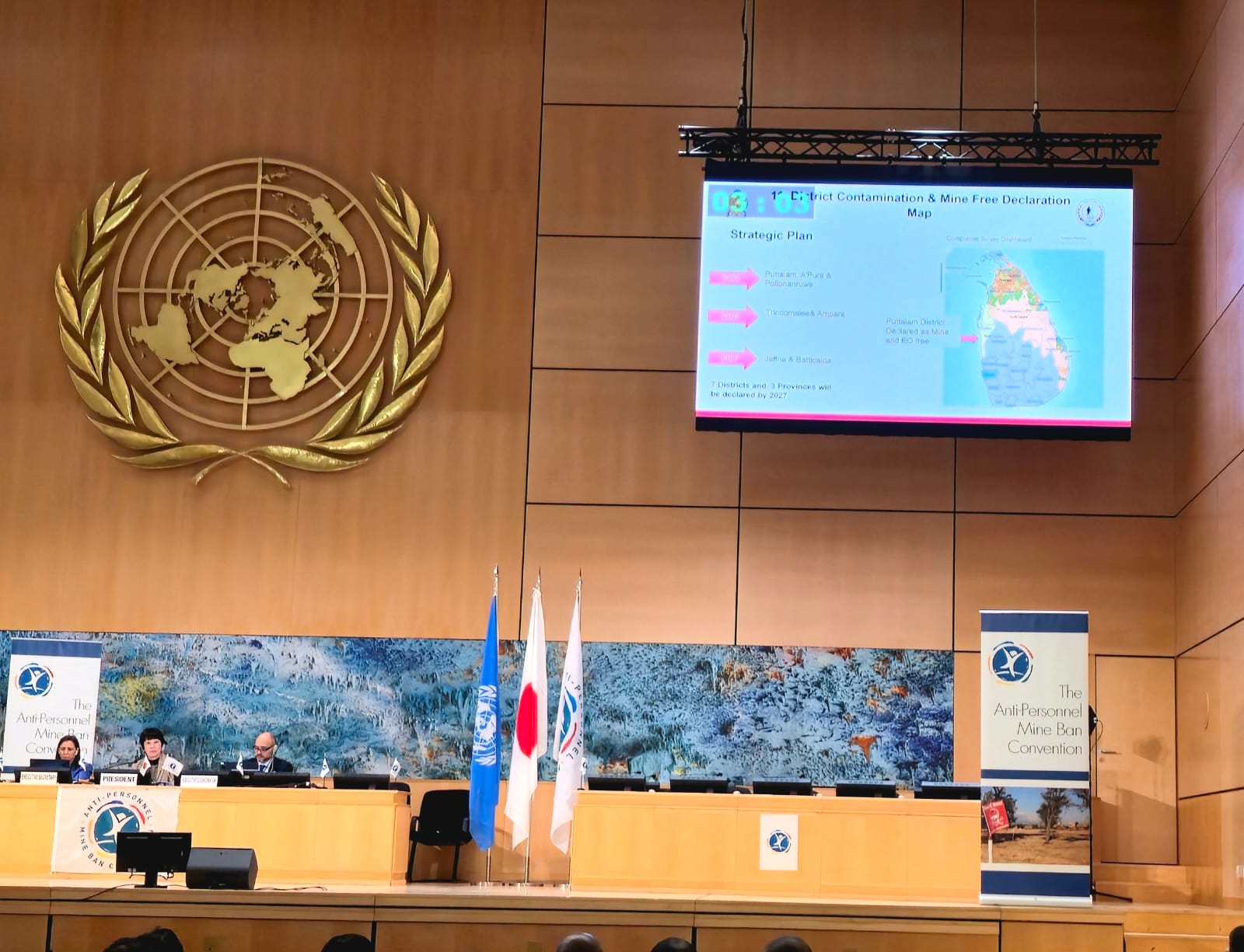
Geographical reduction: By 2025, Sri Lanka expects to declare 3 districts mine-free; in 2026–2027, an additional 2 districts per year. By 2027, a total of 7 districts will be mine/EO-free, with the remaining 4 highly contaminated districts to be completed beyond 2027.
Remaining Challenges
While progress is substantial, the most complex phase of clearance remains ahead.
• 22.1 km2 of confirmed contamination is yet to be cleared.
• Since September 2023, 8 km2 of previously unknown contamination has been discovered.
• A newly identified minefield in Anuradhapura means the district cannot be declared mine-free in 2025 and will likely extend into 2026.
• Donor funding is declining: USD 18.5M (2023) → USD 14.9M (2025).
• Several remaining areas involve semi-submerged lagoon belts, field fortifications, and deep forest zones requiring specialised capabilities.
Due to this emerging contamination and funding realities, Sri Lanka will not meet the current Article 5 deadline of June 2028.
As reflected in our National Strategy, and in line with Convention procedures, Sri Lanka will submit an Article 5 Extension Request by March 2027.
Demining as a Driver of Development
Humanitarian demining in Sri Lanka has become a major enabler of national recovery and economic growth. Clearance has directly supported:
• Reconstruction of the Jaffna railway station and rail line,
• Rehabilitation of the A9 highway, reconnecting the North and South,
• Construction of the Sangupiddy Bridge,
• Resettlement, agriculture, and rural development across former conflict areas,
• Tourism expansion into the North—Jaffna named a Lonely Planet Top 25 Global Destination for 2026.
Demining has also restored access to forests, biodiversity corridors, and coastal lagoons,contributing to sustainable land use and environmental recovery.
Large-scale Government initiatives such as the Northern Coconut Triangle, covering Jaffna,Kilinochchi, Mullaitivu, Mannar, and Vavuniya, depend directly on continued mine clearance to unlock agricultural and private-sector investment.
International travel advisories continue to highlight landmine risks in parts of the North and East—reminding us that incomplete clearance can affect safety, tourism, and national reputation.
Political Commitment and National Ownership
Sri Lanka’s progress is driven by strong national political will—from the President, Prime Minister, Cabinet, and local authorities.
The Government of Sri Lanka is increasing national investment despite fiscal constraints:
• National mine action funding will rise from LKR 70 million to LKR 150 million in 2026,more than doubling our domestic contribution.
To reach completion by 2030, Sri Lanka will require an additional USD 3 million per year from 2026, to maintain a clearance rate of 6 km2 annually and to respond to newly discovered contamination.
Completing clearance is essential for the future of the North and East—supporting livelihoods, tourism, agriculture, environmental restoration, and long-term stability.
Conclusion – The Way Forward
Madam President,
Sri Lanka remains firmly committed to fulfilling its obligations under the Anti-Personnel Mine Ban
Convention in a responsible, evidence-based, and transparent manner. In this context, and acknowledging that Sri Lanka will not be able to meet the current Article 5 deadline of June 2028 due to newly identified contamination and funding constraints, we reaffirm our determination to progress systematically toward completion. As outlined in our National Mine Action Strategy, and in accordance with Convention procedures, Sri Lanka will therefore submit an Article 5 Extension Request by March 2027.
We will continue to rely on our valued partnerships—with GICHD, the ISU, donor governments,and humanitarian demining organisations—to reach a decisive and sustainable completion.
Together, we can ensure that Sri Lanka becomes a mine-free nation, unlocking the full social,economic, and environmental potential of communities long affected by conflict.
Thank you, Madam President.