
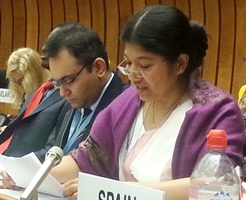
Sri Lanka stated that a comprehensive labour migration policy has been developed, with a view to managing labour migration properly and orderly and to ensure dignity, security and equity for Sri Lankan nationals seeking employment abroad. The Government of Sri Lanka has taken concerted efforts in several policy key areas, namely, improving recruitment practices and educating labour agents, pre-departure orientation, empowerment of those migrants who have re-entered the country, facilitating cheaper, faster, and safer transfer of remittances.
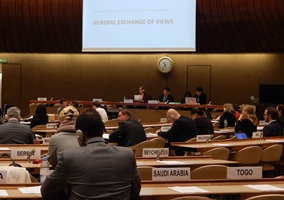
Sri Lanka has been designated by acclamation to Chair the 2015 Meeting of the High Contracting Parties to the Convention on Certain Conventional Weapons (CCW). Ambassador Ravinatha Aryasinha, Permanent Representative of Sri Lanka to the UN in Geneva, succeeds Ambassador Remigiusz A. Henczel, the Permanent Representative of Poland to the UN in Geneva.
Accepting the honor conferred on Sri Lanka by the 118 High Contracting Parties to the convention at the conclusion of the week long CCW sessions in Geneva on 14 November 2014, Ambassador Aryasinha expressed appreciation to the Non Aligned Movement (NAM) for proposing Sri Lanka on behalf of the Group. He said, "I am deeply humbled by the confidence placed in Sri Lanka, and the recognition of Sri Lanka's contribution to the field of disarmament over many decades - through the the Indian Ocean as a Zone of Peace initiative, the Conference on Disarmament (CD), the Treaty on the Non-Proliferation of Nuclear Weapons (NPT), the International Atomic Energy Authority (IAEA), the Organization for Prohibition of Chemical Weapons (OPCW), and particularly since the ending of the terrorist conflict by its comprehensive demining programme, a key focus area of the CCW".
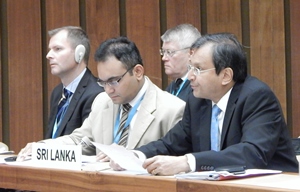
Sri Lanka's Ambassador to the UN in Geneva Ravinatha Aryasinha has said Sri Lanka stands ready to share its experience in comprehensive demining as a 'best practice' with countries which are facing similar challenges. Noting that "Sri Lanka’s continuing progress in demining has been achieved by telescoping what according to some estimates was to take 15 – 20 years, into one of 5 – 7 years duration, he said this was not only a rewarding experience for our people as they now move about freely across the country, but also a positive lesson for other conflict affected countries, where nationally owned and nationally driven programmes could achieve their intended purposes, if the necessary political commitment, resolve and pragmatic vision is put in place".
Ambassador Aryasinha made these observations when he addressed the 16th Annual Conference of the High Contracting Parties to Amended Protocol II on Prohibitions or Restrictions on the use of Mines, Booby-Traps and other Devices of the Convention on Certain Conventional Weapons (CCW) on Wednesday (12 November 2014) at the Palais des Nations in Geneva. The Convention on Certain Conventional Weapons came as a result of an increased international realization that the effects caused by certain conventional weapons may be excessively injurious and indiscriminate. The Convention and its Protocols together manifest a clear intention and commitment of the Contracting Parties to address this challenge effectively, through the adoption of national programmes and measures.
Sri Lanka reiterates its supports the adoption of a Declaration which would demonstrate the commitment and efforts of the international community for the promotion and protection of the rights of peasants and other people working in rural areas.
Sri Lanka made this intervention at the First Informal Consultation of the Open-ended Working Group on the UN Declaration on the Rights of Peasants and Other People Working in Rural Areas at the Human Rights Council on 12 November 2014 in Geneva.
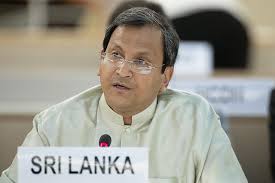
Following the News Release yesterday (7 November 2014) by the UN Office of the High Commissioner for Human Rights condemning disinformation designed to discredit the UN investigation on Sri Lanka, the Permanent Representative of Sri Lanka to the UN in Geneva has sent the attached communication to the UN High Commissioner for Human Rights in this regard.
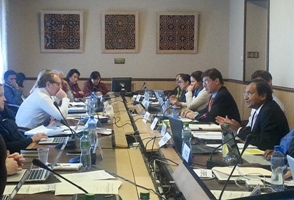
Sri Lanka's Permanent Representative to the UN in Geneva Ravinatha Aryasinha, has said Sri Lanka which took over the chair of the Colombo Process (CP) one year ago was of the view that if it were to make a difference and ensure that some real benefits would accrue to the people of the member countries, it was important that they address the tough issues, including 'Ethical Labour Recruitment Practices'. He noted that in ongoing deliberations the CP is seeking to harmonize existing national regulatory frameworks, promote Standard Employment Contracts (including addressing issue of contract substitution and create a registration mechanism for contracts), consider common minimum wage levels, and conditions that promote health and well-being and insurance protection, and to develop a common position on ethical recruitment practices.
Ambassador Aryasinha made these observations and reviewed the progress made by the CP under Sri Lanka's leadership, when he addressed an Expert Consultation on Recruitment Practices and their Impact on Human Rights of Migrants, held at the Palais des Nations in Geneva on 31 October 2014. The consultation was convened by Mr. Francois Crepeau, Special Repporteur on the Human Rights of Migrants and was attended by diplomats, academics, representatives of the ILO and IOM, Recruitment specialists, as well as NGOs involved in the field.
Sri Lanka's Permanent Representative to the UN in Geneva Ravinatha Aryasinha, has said Sri Lanka which took over the chair of the Colombo Process (CP) one year ago was of the view that if it were to make a difference and ensure that some real benefits would accrue to the people of the member countries, it was important that they address the tough issues, including 'Ethical Labour Recruitment Practices'. He noted that in ongoing deliberations the CP is seeking to harmonize existing national regulatory frameworks, promote Standard Employment Contracts (including addressing issue of contract substitution and create a registration mechanism for contracts), consider common minimum wage levels, and conditions that promote health and well-being and insurance protection, and to develop a common position on ethical recruitment practices.
Ambassador Aryasinha made these observations and reviewed the progress made by the CP under Sri Lanka's leadership, when he addressed an Expert Consultation on Recruitment Practices and their Impact on Human Rights of Migrants, held at the Palais des Nations in Geneva on 31 October 2014. The consultation was convened by Mr. Francois Crepeau, Special Repporteur on the Human Rights of Migrants and was attended by diplomats, academics, representatives of the ILO and IOM, Recruitment specialists, as well as NGOs involved in the field.