
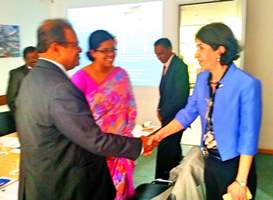
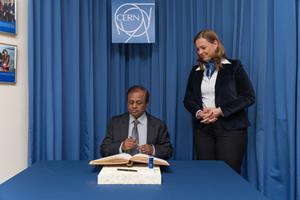
Minister of Science, Technology & Research, Susil Premajayantha who visited the European Organization for Nuclear Research (CERN) 10 May 2016, has agreed to enhance collaboration between CERN and Sri Lanka, through the development of a network of scientific community of Sri Lankan scientists and researchers, who could remain engaged with the research activity carried out by CERN - the most prominent particle physics research institute in the world which is best known for its flagship discovery of the ‘Higgs-Boson” in 2012. It has been suggested that a ‘network’ of scientists with an organizational structure could be formed within Sri Lanka, with one institute serving as the nucleus in collaborations with CERN. It was suggested that the suitable scientists to be members of such a ‘network’ can be identified with the help of CERN, through national science institutions such as the National Science Foundation (NSF) and Arthur C. Clarke Institute, 7 science faculties in Universities etc.
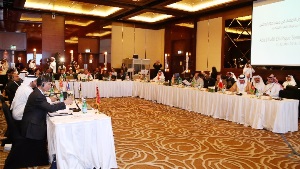
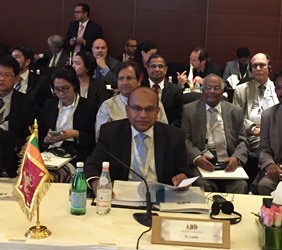
Sri Lanka has been unanimously elected to be the next Chair-in-Office of the 17 member ‘Abu Dhabi Dialogue’ (ADD) among Asian Countries of Labour Origin and Destination.
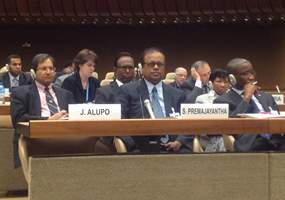
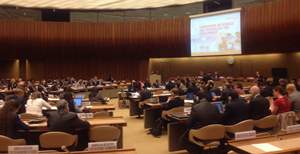
Minister of Science, Technology & Research of Sri Lanka, Susil Premajayantha said that there is a sense of urgency in Sri Lanka today over moving towards a knowledge based society. Underlining that Sri Lanka’s ability to facilitate a scientific culture that encourages innovative thinking will determine the country’s ability to effectively use knowledge for growth, he said emphasis has been laid on developing strong research and development culture and the methods of ensuring quality of research in the country.
Minister Premajayantha made the above observations at the 18th Annual Session of the United Nations Commission on Science and Technology for Development (CSTD) held from 9-13 May in Geneva, Switzerland, during the High Level Segment on ‘Implementing the post 2015 development agenda: moving from commitments to results.’
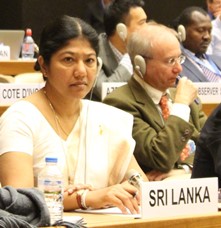
Referring to the arguments made by some that “nuclear weapons are not illegal as per se and that the UN Charter has not excluded the possibility of using nuclear weapons in self – defense”, Sri Lanka said that such “existing lacuna in international law for not explicitly prohibiting nuclear weapons should not be taken as a cover to legitimize nuclear weapons, instead we should take it as a catalyst to work collectively in order to close the gaps and strengthen the international law.”
Sri Lanka’s Deputy Permanent Representative to the UN in Geneva, Mrs. Samantha Jayasuriya made these remarks on 11th May 2016 at the second session of the Open – Ended Working Group (OEWG) on Taking Forward Multilateral Nuclear Disarmament Negotiations, held in Geneva from 2-13 May 2016. She further added that a ‘step –by –step’ approach with an undefined ‘final stage’ tends to lose the momentum, and that any “undue delays in taking proactive actions or having to wait until a minimum threshold point is fulfilled by all nuclear possessing States, compromises the rights of States who are not relying on nuclear weapons for their security, and are being subjected to unfair risk of nuclear weapon detonations, accidental or intentional.”
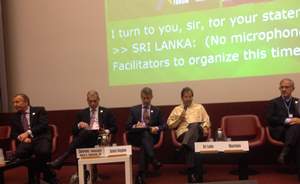

Sri Lanka's Permanent Representative to the UN in Geneva Ravinatha Aryasinha has said, by becoming a State party to the Budapest Cyber Crime Convention from 1st September 2015, Sri Lanka has demonstrated its strong commitment towards harmonizing national laws, improving investigative techniques, and increasing law enforcement and judicial cooperation among nations in combating cyber crimes.
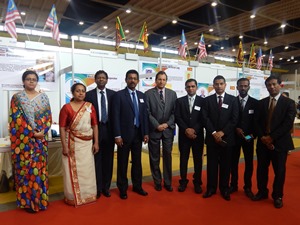
A team of 7 inventors led by Dr. Mahesh Edirisinghe, Commissioner of Sri Lanka Inventors Commission (SLIC) participated at the recently concluded 44th International Inventors Exhibition held from 13-17 April 2016 in Geneva. They have secured 2 Gold Medals with a special recognition from jury for one invention, 3 Silver Medals and 2 Bronze Medals.
Two inventors were fully sponsored by Sri Lanka Inventors Commission (SLIC), having been selected from among the Presidential Award Winners and Sahasak Nimavum Award winners while the other inventors have joined the Sri Lankan delegation on their own expenses.
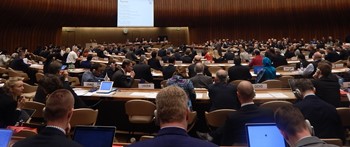
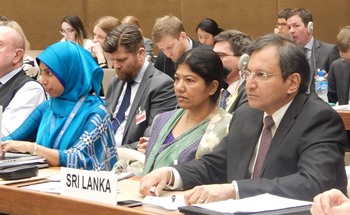
Sri Lanka has cautioned that the potential military advantages of Lethal Autonomous Weapon Systems (LAWS) would risk proliferation and thereby lower the threshold of the rules of warfare, undermining regional as well as global stability. Sri Lanka also alerted on the risk of non-state actors gaining access to such weapons and the potential breach of cyber security in the autonomous technology used in weapons systems.